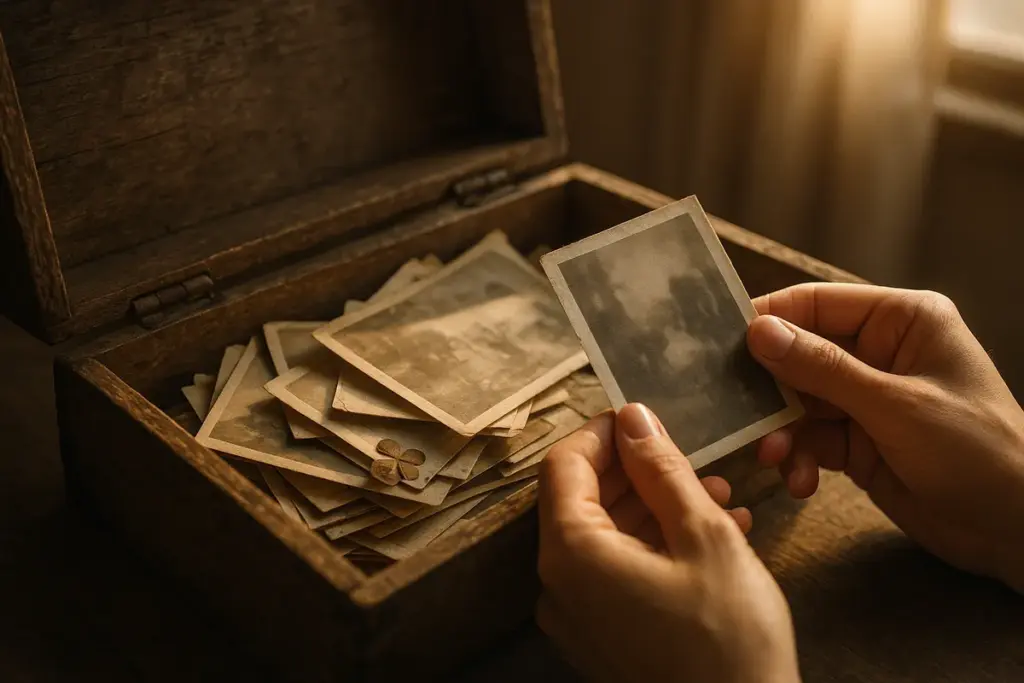
There’s a particular kind of paralysis that sets in when you’re standing in front of a storage unit or a childhood bedroom, staring at boxes of things that belonged to someone you loved, or a version of yourself you barely recognize anymore. If you’ve ever called Got Junk NYC and then spent twenty minutes apologizing to the crew for a grandmother’s rocking chair before they even touched it, you’re not alone. Letting go of sentimental items is genuinely hard. It’s not a character flaw. It’s human. But at some point, the stuff stops being a comfort and starts being a weight, and that’s when it’s time to talk honestly about what holding on is actually costing you.

The Memory Lives in You, Not the Object
This is the thing nobody says clearly enough: the memory of your father teaching you to ride a bike doesn’t live in the rusted bicycle taking up half your Brooklyn basement. It lives in you. Objects can trigger memories, sure, but they don’t contain them. Once you really sit with that idea, it changes the math entirely.
A useful exercise before any major cleanout is to hold an item and ask yourself two honest questions. First: Does this bring me genuine joy when I look at it, or does it bring me guilt and obligation? Second: If I hadn’t seen this in five years, would I have missed it? Most people find that the answer to both questions tells them everything they need to know.
The items that genuinely deserve space in your life are the ones that make you smile without effort. Everything else is clutter wearing an emotional costume.
Why New York Apartments Make This Harder Than It Has to Be
Living in New York adds a layer of complexity that people in other cities don’t deal with the same way. Space is not a luxury here, it’s a resource. A 650-square-foot apartment in Queens cannot absorb three generations of accumulated belongings without somebody paying the price, usually in stress, cramped living, and a low-grade sense of chaos that never quite goes away.
What makes it worse is that New Yorkers often inherit the contents of relatives’ apartments on short notice. A parent passes, the lease ends in thirty days, and suddenly you’re responsible for fifty years of someone else’s life packed into rooms you can barely move through. There’s no time to grieve properly, let alone sort thoughtfully. Decisions get made in a panic, and things either get kept out of guilt or tossed out of exhaustion, neither of which feels right afterward.
If you’re facing that kind of situation, it helps to know that a well-planned apartment cleanout in NYC doesn’t have to feel like an emergency. Working with a crew that understands the pace and pressure of this city makes a real difference. People who’ve been through it often say the biggest relief wasn’t getting rid of things, it was having someone else handle the heavy lifting while they focused on making decisions.

A System That Actually Works When Emotions Are Running High
Sorting sentimental items without a structure is a recipe for spending six hours holding one photo album and accomplishing nothing. Give yourself a framework before you start.
Try breaking everything into four categories: KeepPass OnDonateand Remove. The “Pass On” category is the one most people forget, and it’s often the most emotionally satisfying. If your aunt’s china means nothing to you but would mean everything to a cousin, that’s not getting rid of it, that’s giving it a better home. The object continues to carry meaning. It just does it somewhere else.
Set a firm limit on the “Keep” pile. In a New York apartment, that limit is usually dictated by physical reality anyway. One shelf. One box. One corner of a closet. Whatever the boundary is, name it before you start and stick to it. When the pile overflows the boundary, something has to come out before something new goes in.
For the “Remove” pile, don’t let it sit. The longer it stays in your space, the more likely you are to second-guess yourself and pull things back out. Schedule the removal before you start sorting, not after. That external deadline is often the only thing that keeps the process moving forward.
Giving Yourself Permission to Actually Finish
One of the most common things people say after a big cleanout is that they wish they’d done it sooner. Not because the stuff wasn’t meaningful, it was, but because the relief on the other side is something they didn’t expect. Lighter. That’s the word that comes up again and again. People feel lighter.
There’s also something worth saying about the difference between honoring someone’s memory and preserving their belongings indefinitely. You can love someone deeply and still let go of the physical things they left behind. Those aren’t in conflict. Keeping every item doesn’t make you more loyal. It just makes your apartment harder to live in.
The team at Junk removal in NYC has worked with New Yorkers through estate cleanouts, downsizing moves, and decades of accumulated clutter, and the one consistent thing is that people feel better once it’s done. Not worse. Better. If you’re ready to take that step, the hardest part is usually just deciding to start.
Frequently Asked Questions
What should I do if I keep pulling things back out of the “remove” pile before the crew arrives?
The article is direct about this: schedule the removal before you start sorting, not after, because that external deadline is what keeps the process moving forward. If you give yourself open-ended time with the pile sitting in your apartment, second-guessing is almost guaranteed. Treat the pickup appointment as a hard stop, not a suggestion.
How do I handle a parent’s apartment cleanout in NYC when the lease ends in just a few weeks?
The article acknowledges this is one of the hardest situations New Yorkers face, short notice, grief, and fifty years of someone else’s belongings packed into rooms you can barely move through. The advice is to avoid making decisions purely out of panic or exhaustion, since things either get kept out of guilt or tossed out of exhaustion, and neither feels right afterward. Having a crew handle the physical work while you focus on decisions is specifically what the article points to as the biggest relief people report.
What is the “Pass On” category and why does the article say most people forget it?
The “Pass On” category is for items that hold no meaning for you personally but would genuinely matter to someone else in the family, the article uses the example of a cousin who might actually want your aunt’s china. It’s not the same as getting rid of something; the object keeps carrying meaning, just somewhere else. Most people skip straight to Keep or Donate and miss this option entirely, which is also often the most emotionally satisfying one.
How do I decide how much to actually keep when I’m sorting through sentimental items in a small NYC apartment?
The article says to name a physical boundary before you start, one shelf, one box, one corner of a closet, and stick to it rather than letting the “Keep” pile expand without a limit. When the pile overflows that boundary, something has to come out before anything new goes in. In a New York apartment, the physical reality of the space usually sets that limit for you anyway.
Does letting go of a relative’s belongings mean I’m not honoring their memory properly?
The article addresses this directly: keeping every item doesn’t make you more loyal to someone, it just makes your apartment harder to live in. Loving someone deeply and letting go of the physical things they left behind are not in conflict with each other. The memory lives in you, not in the object, and that’s the core idea the article asks you to sit with before any major cleanout.
🎧 Listen to this as a podcast
Also on Apple Podcasts, Spotify, and Amazon Music.